




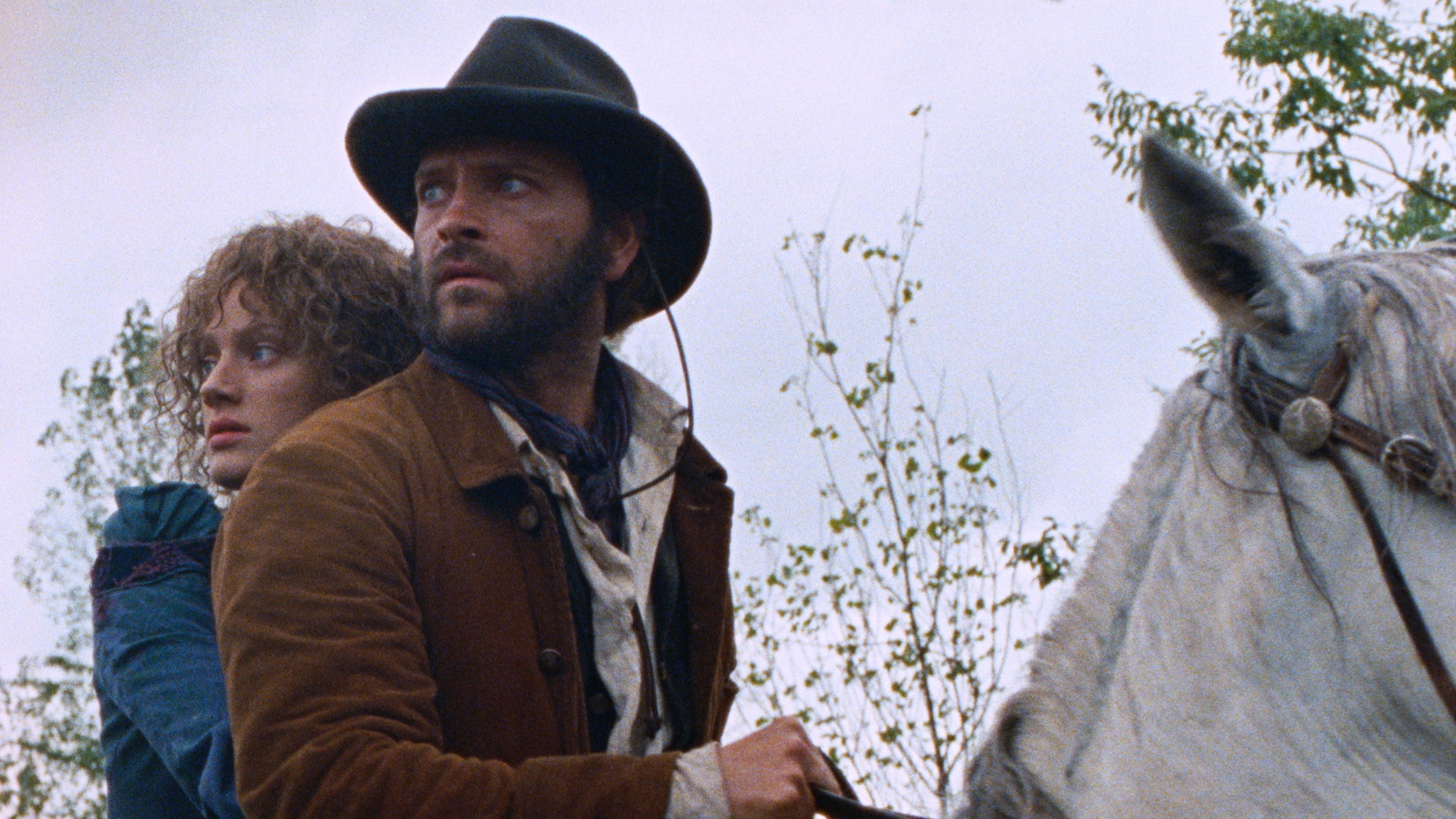
In their ambitious anti-western fable Testa o croce?, Alessio Rigo de Righi and Matteo Zoppis attempt to mobilise the western genre, or more precisely the collectively constructed imaginary of guns, cowboys and heroes, in order to tell a “feminist” version of the story. To do so, they replace the heroic gunman with a cowboy who is handsome but foolish, proud but easily arrogant. They also substitute the vast, empty, sometimes cold and sometimes scorching landscapes of the American West with the narrower, water-laden terrain of rural Italy. Likewise, the fateful emotional gravitas typical of classic westerns gives way to a far more random and episodic narrative structure.
Yet, when we consider the cumulative effect of these efforts to deconstruct the fable of the American West, one question becomes increasingly difficult to ignore: what is all this ultimately for? Is the film pushing back against the masculinity that dominates the collective imaginary of the genre, or against its colonial tradition?
Certainly, framing the film as a coming-of-age story centred on a privileged woman, or situating it against the backdrop of an uprising against the ruling class, gestures towards a critical ambition. However, when reconsidering the narrative from its very beginning, the necessity of anchoring the female protagonist within a romantic relationship with a cowboy appears largely redundant. The same applies to the seemingly heroic ending: rather than condemning the violence and killing that dominate the western tradition, violence remains positioned as a form of victory and awakening.
By focusing on the empowerment of an individual woman within a male-dominated world, while other female characters remain largely marginalised, confined to their relationships with men and frequently silenced, Testa o croce? falls short of a systemic and forceful critique of the western tradition. Compared with the works of Kelly Reichardt, Chloé Zhao or Paola Cortellesi, the film ultimately reads less as a radical rethinking of the genre than as another gesture of empowerment that fails to fully detach itself from the masculine structures embedded in its generic inheritance.
24
Jan
2026




0 Comments
Log in to leave a comment.