




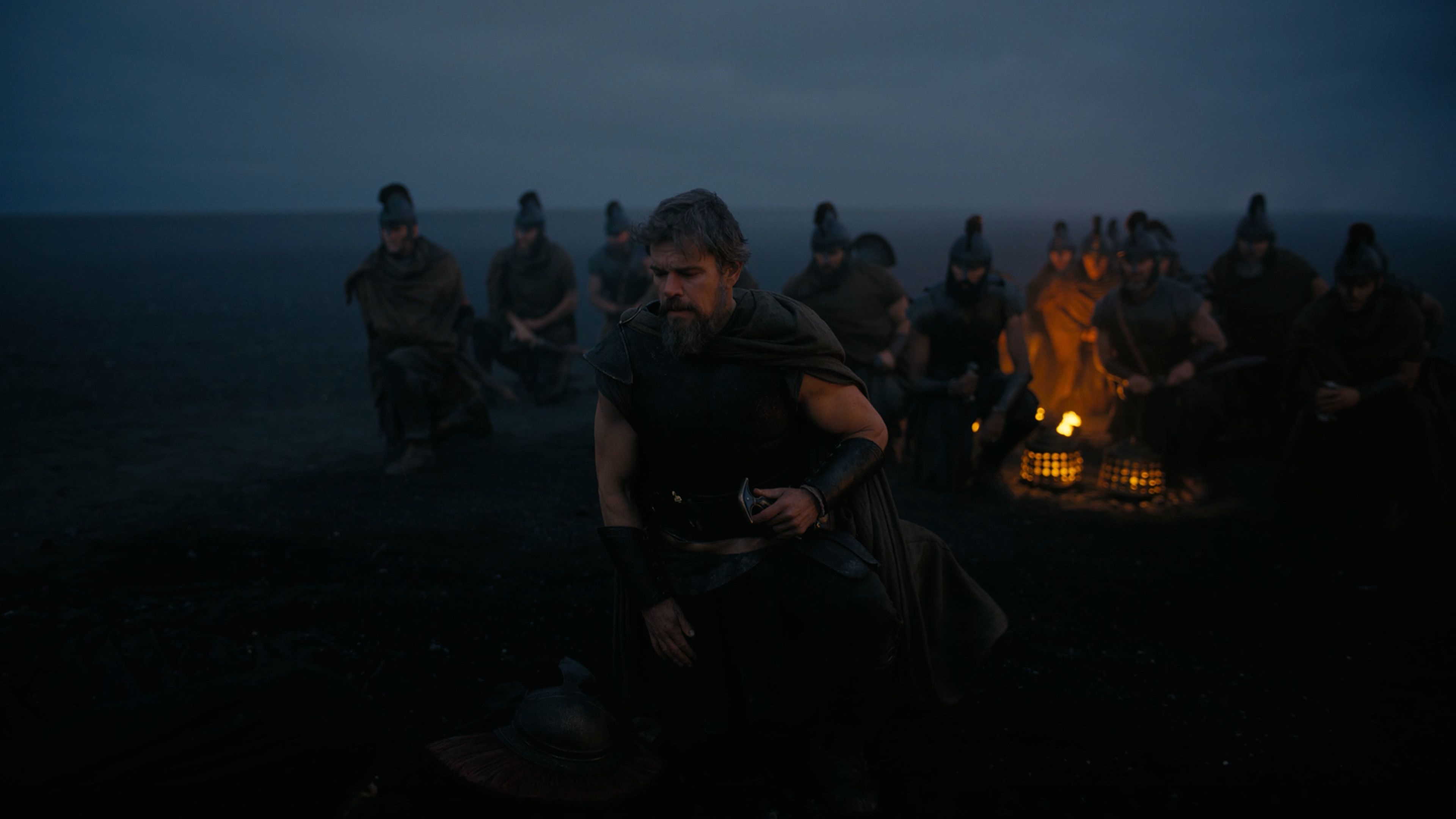
Christopher Nolan’s The Odyssey again approaches the epic primarily as a story about war. He reimagines Odysseus as a guilt-ridden commander suffering from the psychological trauma of combat, and the film becomes, above all, a long and painful journey home. What puzzled me, however, is Nolan’s treatment of the gods.
In Homer, the gods are active agents with human tempers and their own designs. Athena above all acts as Odysseus’s guardian and guide, stepping in at the moments that most need her to carry the story forward as a form of deus ex machina. Nolan works differently. With the exception of Athena, the gods in his adaptation function mainly as symbols of systemic oppression. Yet he does not drain the story of fate, and once the gods lose the human qualities they hold in the myths, a real contradiction opens up. On one side they embody a violence that is transcendent, almost elemental. On the other they seem to stand as guardians of justice, upholding a moral order that is recognisably human. That order rests on causality and on a linear idea of justice, and this is precisely what the film never manages to reconcile with the indifference of nature and with fate itself. The gap stays in the finished work, and that is what puzzled me.
Therefore, it raises an important question about the film core message: there is something that Odysseus breaks, but in the name of god, what is the thing?
21
Jul
2026




0 Comments
Log in to leave a comment.